GPUAccelerated robotic development package IsaacROSby5.0Adjust the perception model, pick and place.AIAdded as a reusable task for agents.ROSUbuntu and Jetson have also expanded.
Divide setups and operations into reusable skills.
NVIDIA's robot development package Isaac ROS 5.0 added set-up and manipulation skills. Not only developers, AI agents can use these as reusable operating procedures.
The Agent Documentation is designed to enable AI agents to understand Isaac ROS’s tools and procedures by combining skills and documentation to pass on both the subject of development work and how it is executed to AI agents.
Adjust the stereo perception model to the camera conditions.
The Foundation Stereo Fine-Tuning Skills enable AI agents to adapt stereo-perceived models to the developer’s camera, use environment, and robotic applications.
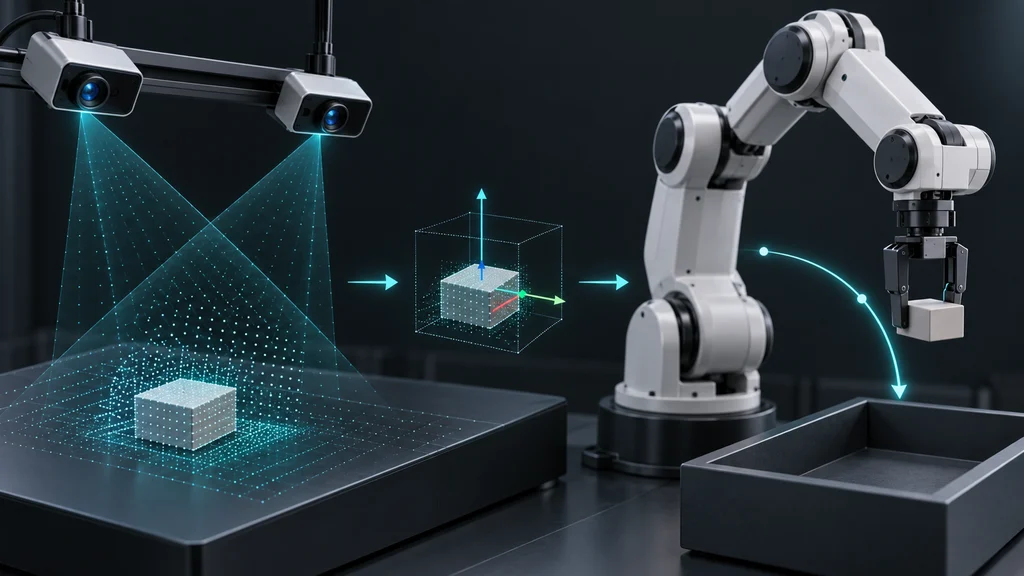
Following the adjusted perception process, the object position estimate model FoundationPose recognizes and tracks the position and direction of the object.NVIDIA says the new agency inference library has made this recognition and tracking process up to 5.5 times faster.
Connect from detection to posture output to holding skills.
Pick-and-place processing has become a skill for AI agents that is available alone.This skill connects object detection, depth estimation, and posture output in one task.
By adding depth information to the detected object and converting it to a positional output indicating position and direction, the output can be transferred to the processing of holding and placement.In addition to the configuration for individually assembling perceptual and operational processing, a series of processing can be selected as a reusable unit.
Connect the ROS data path to the Jetson GPU run
Isaac ROS 5.0 supports ROS Lyrical and Ubuntu 24.04.NVIDIA has partnered with the Open Source Robotics Alliance to provide ROS Lyrical with a standard data processing interface for efficiently running robot software on different computing hardware including GPU.
With this interface, CUDA is an example of implementation of GPU acceleration. By connecting to GPU processing from a common data path, the ROS application can access different acceleration capabilities for each computing hardware.
The running environment on the robot covers the NVIDIA range from Jetson Orin Nano to Jetson Thor. The configuration allows the assembled perception, navigation, AI model, and application logic to be deployed on the Jetson platform according to the processing scale.